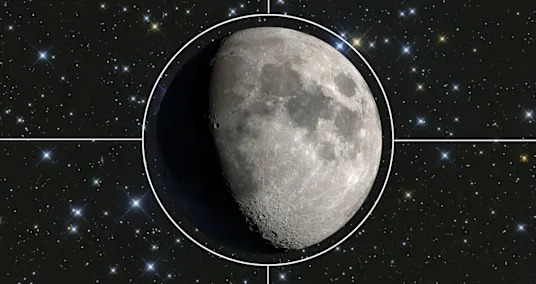
Get ready for a double celestial event this week.
November’s full beaver supermoon will peak at 8:19 a.m. ET Wednesday, according to The Old Farmer’s Almanac. But the silvery orb will be below the horizon at that time, so take the time to look outside during the evening hours for the best view.
The moniker beaver moon marks the time of year when beavers begin preparing for the winter by fortifying dams and lodges and stocking up on food. This full moon is also referred to as the digging moon by the Tlingit people, deer rutting moon by the Dakota and frost moon by the Cree, according to the almanac.
This lunar event will be the second of three back-to-back supermoons this year. A supermoon happens when the moon reaches perigee, or its nearest point to our planet, making it appear larger and fuller.
“It’s so subtle that the human eye does not pick up the superness of it. But we still give it a fun name, I guess, to indicate that technically, this is the moon at its biggest and brightest, just not that much bigger on average than it usually is,” said Dr. Alissa Bans, director of undergraduate studies of Emory University’s department of physics.
If clouds obscure the view in your area, the Virtual Telescope Project will share a livestream of the full moon over Manciano, Italy, beginning at 2 p.m. ET Wednesday.
Keep an eye out for fireballs
The second celestial event this week is the Southern Taurid meteor shower, which will peak at 8 a.m. ET Wednesday, according to EarthSky.
This meteor shower does not have a strong peak — there may only be five meteors an hour, said Robert Lunsford, fireball report coordinator for the American Meteorological Society. “But anytime it’s dark in that period (October through early November), you’ll be able to see these slow meteors coming from the constellation of Aries in October and Taurids in November.”
The Taurids are the result of Earth’s passing through debris left by the small comet 2P/Encke. It has the shortest orbit of any comet that’s been discovered — just 3.3 years, compared with long-period comets that have orbits lasting between 200 and 1,000 years. In previous years, this meteor shower has produced fireballs during Halloween, so they’ve also been called the “Halloween fireballs.”
“The entire encounter with Taurids this year is special because we’re predicted to encounter some fresh material that’s a little bit larger than your average Taurid meteor. And these tend to cause fireballs,” Lunsford said.
For those planning to look for these meteors, they may be difficult to spot since the moonlight will drown out most activity, but there is still a chance to see a fireball, Lunsford said.
For best viewing, find an area with clear skies away from tall buildings and bright lights. You should aim to be outside any time after the sun sets and before the moon reaches its highest point Wednesday night.
“They slightly favor the Northern Hemisphere, but they are visible in both (hemispheres). Your only problem down in Australia or South Africa is the radiant is lower in the sky, so more of the Taurid meteors will be obscured by the horizon,” Lunsford said.
Upcoming meteor showers
Here are the peak dates of other meteor showers anticipated this year, according to the American Meteor Society and EarthSky.
Northern Taurids: November 11-12
Leonids: November 16-17
Geminids: December 13-14
Ursids: December 21-22
Upcoming supermoons
Look out for the last full supermoon this year:
December 4: Cold moon
For more CNN news and newsletters create an account at CNN.com
NEUESTE BEITRÄGE
- 1
 Cocaine, caffeine, painkillers consumed by sharks in Bahamas, study finds26.03.2026
 - 2Doulas play essential roles in reproductive health care – and more states are beginning to recognize it10.12.2025
- 3Safeguarding Your Senior Protection Against Extortion and Tricks.19.10.2023
- 4Cheetah, Hammerhead Shark, and 38 Other Animals in Danger of Extinction Receive New International Protections from U.N.02.04.2026
- 5What is the Insurrection Act? Can Trump really use the military to 'put an end' to Minneapolis ICE protests?15.01.2026





Ähnliche Artikel
- Taco Bell debuts its Baja Blast pie, and the reactions may surprise you07.11.2025
- Vote in favor of your Favored sort of footwear06.06.2024
- SpaceX launches Italian Earth-observing satellite to orbit on the 1st mission of 2026 (video)02.01.2026
- Cruising Solo All over the Planet: An Excursion of Self-Disclosure22.09.2023
- Everyday Seasonal Positions That Compensate Fairly in the US05.06.2024
- Vial marked 'Polonium 210' sparks scare during German Easter egg hunt05.04.2026
- Step by step instructions to Contrast Lab Jewels and Regular Ones17.10.2023
- Giude to Best Web based Learning Stage01.01.1
- Don't miss the waxing moon swing by the Beehive star cluster March 2726.03.2026
- Displaced Palestinian families suffer as heavy rains flood Gaza tent camps14.11.2025