
THE GIST
For a while, Europe’s retailers have been living in that pleasant illusion where geopolitics is someone else’s problem.
Oil spikes, shipping chaos, energy shocks, all very dramatic, but shoppers kept buying. That illusion is starting to crack. Next and H&M are now signaling that if the Middle East conflict lasts, prices go up and consumers eventually push back.
WHAT HAPPENED
United Kingdom retailer Next and Swedish fast-fashion giant H&M both warned that a prolonged Middle East conflict could feed through into higher costs and weaker consumer demand.
Next said it expects about £15 million (about $20 million) in additional short-term costs, including £8 million from air freight, £4 million from sea freight surcharges and £3 million from higher U.K. energy costs. For now, those costs are being offset elsewhere. But chief executive Simon Wolfson said that if the conflict lasts longer than three months, the company may need to raise prices by around 1.5% to 2%.
H&M struck a similar tone. Chief executive Daniel Erver said the conflict has had only a limited direct impact so far, but warned that prolonged disruption could push up energy and transport costs, creating fresh inflationary pressure on already stretched consumers.
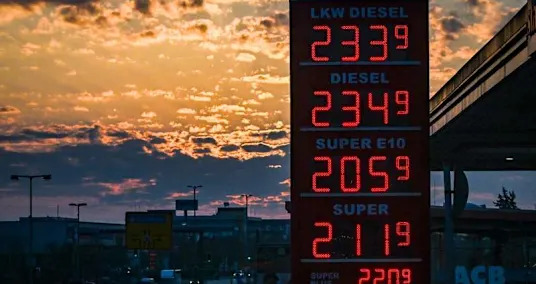
The warnings come as broader cracks appear across the consumer economy. Energy and shipping costs have risen as the Middle East conflict disrupts trade routes and commodity markets. Chemical companies such as BASF and Lanxess have already raised prices, feeding through into everyday goods.
Other retailers are flagging similar risks. Polish fashion group LPP has warned on fuel and logistics costs, while the U.K.’s Co-op said inflation has not yet hit shelf prices but remains a looming threat.
So far, demand has held up. Both Next and H&M say shoppers are still spending. The bigger question is what happens when temporary cost pressures become permanent features of the system.
WHY IT MATTERS
Because this is how inflation returns, gradually, then all at once.
Retailers have just spent years dealing with the aftershocks of the Ukraine war, when higher energy costs rippled through supply chains and squeezed both margins and consumers. No one wants a repeat. But they may not get a choice.
Our analysts just identified a stock with the potential to be the next Nvidia. Tell us how you invest and we'll show you why it's our #1 pick. Tap here.
The transmission mechanism is already in motion. Freight costs rise. Energy prices follow. Suppliers adjust. Retailers absorb what they can. Eventually, prices move.
NEUESTE BEITRÄGE
- 1
 Pedal Power: Divulging Well known Bike Brands for Each Cyclist05.06.2024
 - 2Transform the daily grind to make life more interesting – a philosopher shares 3 strategies to help you attain the good life04.01.2026
- 3Let them eat (Taylor Swift) cake: The baker turning A-listers into life-size desserts12.12.2025
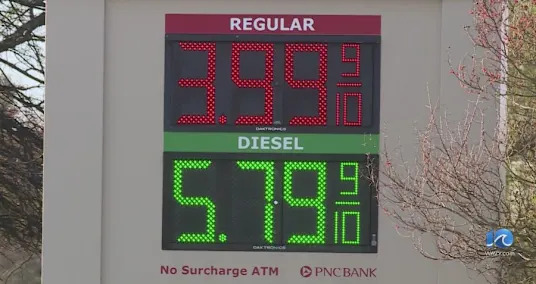
- 4Pain at the pump for Hampton Roads residents03.04.2026
- 5Muslim nations condemn new Israeli death penalty law02.04.2026


Ähnliche Artikel
- McDonald's is bringing two 'KPop Demon Hunters' meals to McDonald's. Here's what they include and when they launch.25.03.2026
- Big majority in Germany call Berlin's efforts on gas prices too weak27.03.2026
- 19 Strange Motion pictures You Shouldn't Watch With Your Mum26.11.2015
- The secret appeal of Harlan Coben’s messy, addictive TV thrillers15.01.2026
- Are IDF reservists properly armed during post-war operations?11.01.2026
- 6 Robot Vacuum Cleaners for Easy Home Cleaning06.06.2024
- The Solution to Defeating Tarrying: Systems for Expanded Efficiency07.07.2023
- NASA's giant moon rocket, in photos28.03.2026
- Nearly half of reindeer have been wiped out and armadillos are in Iowa. Here’s how animals are weathering warming holidays25.12.2025
- Rio Tinto resumes operations at three Pilbara port terminals after cyclone Narelle30.03.2026